Contact Us
Brass Forging Induction Heating Production Line

Brass Forging Induction Heating Production Line

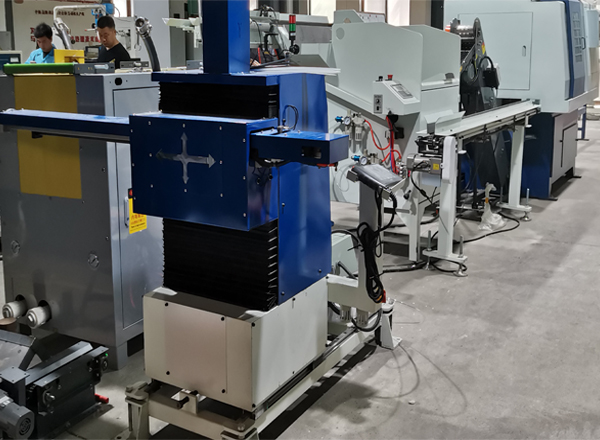
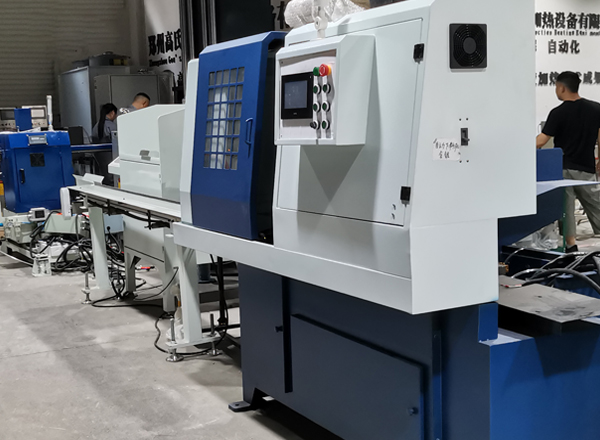
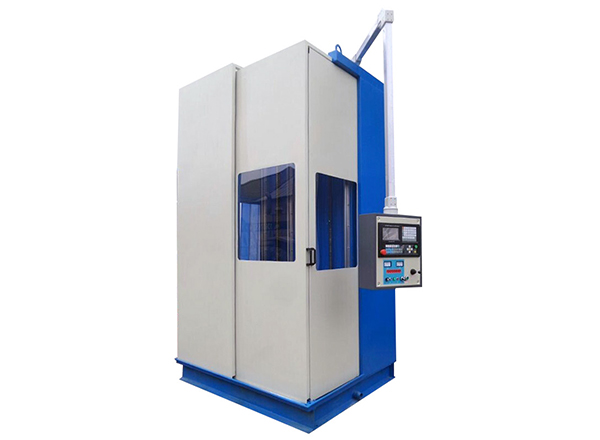
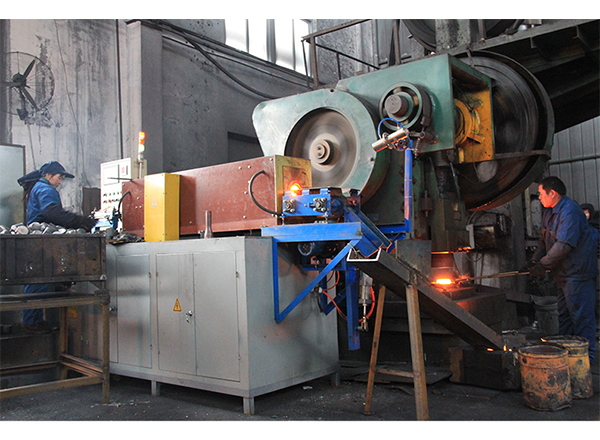
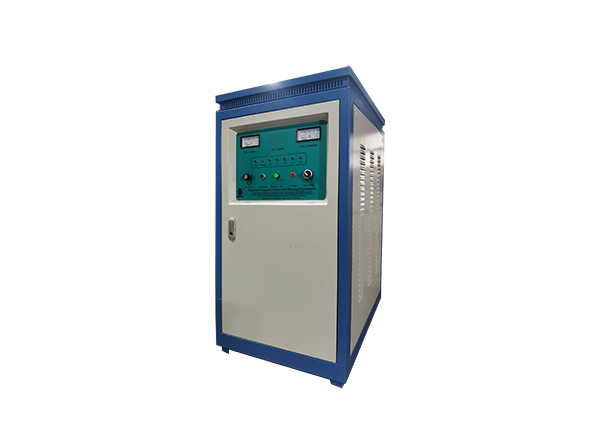
The brass forging induction heating production line is a specialized automated heating equipment designed for the hot forging process of brass wire (such as upsetting, drawing, and bending). Its core technology relies on electromagnetic induction eddy current heating, combined with the physical properties of brass (good conductivity and low melting point) to achieve efficient and precise heating. The high compatibility of induction heating technology with the brass forging process gives it significant advantages over traditional heating methods (such as coal furnaces, resistance furnaces, and gas furnaces), mainly in terms of production efficiency, cost control, and product quality.


Send Inquiry     

Advantages of brass forging induction heating production line

  • High heating efficiency significantly increases production capacity.
    Rapid heating: Induction heating generates eddy currents directly inside the brass wire through electromagnetic induction, eliminating the need for the "heating medium first, then conduction" process. The heating speed of the brass wire from room temperature to the required forging temperature (usually 600-850℃) is 30%-50% faster than traditional gas furnaces, and the heating time for a single wire can be shortened to a few seconds to tens of seconds.
    Strong continuous production capability: The production line can be combined with a feeding mechanism to achieve "continuous feeding - heating - discharging," adapting to different specifications of brass wire diameters from φ3-φ50mm. The hourly production capacity of a single production line can reach hundreds of kilograms to several tons, far exceeding intermittent heating equipment.
  • Excellent heating uniformity reduces forging defects.
    Small internal and external temperature difference: The "skin effect" of induction heating allows for control of the heating depth by adjusting the frequency (typically 200-8000Hz). The temperature difference between the surface and core of the brass wire can be controlled within ±5℃, avoiding forging cracks and uneven deformation caused by the "overheating on the outside and underheating on the inside" problem of traditional heating methods. Precise and controllable temperature: Equipped with an infrared thermometer and a PID closed-loop control system, the system can monitor the wire temperature in real time and dynamically adjust the heating power, ensuring consistent heating temperature for each section of wire, especially suitable for the forging of high-precision brass parts (such as valve cores and connector terminals).
  • Low energy consumption significantly reduces production costs.
    High energy efficiency ratio: The energy utilization rate of induction heating can reach 60%-85%, while traditional resistance furnaces have an energy efficiency of only 30%-50%, and gas furnaces often have an efficiency below 40% due to large heat losses.  Long-term operation can save more than 30% in energy costs.
    Reduced material loss: Rapid heating can significantly reduce the oxidation and decarburization of the brass wire surface (oxide scale loss rate ≤0.5%), which is far lower than the 2%-5% of gas furnaces, reducing raw material waste. At the same time, less oxide scale means lower costs for subsequent cleaning processes.
  • High degree of automation reduces reliance on manual labor.
    Full process integration: Seamlessly connects with front-end wire feeding racks and back-end feeding robots/forging equipment, achieving fully automatic operation from "wire feeding - straightening - heating - forging." Only 1-2 employees are needed for monitoring and daily maintenance, reducing labor costs by more than 50% compared to traditional heating methods that require dedicated personnel for feeding. Intelligent control:  Utilizes a PLC control system that supports pre-setting heating parameters (power, temperature, feeding speed) for different specifications of brass wire. Switching between specifications only requires recalling the parameters, eliminating the need for re-debugging and adapting to multi-variety, small-batch production needs.
  • Environmentally friendly and safe, meeting industrial compliance requirements.
    No pollutant emissions: The heating process does not require fuel combustion, resulting in no emissions of smoke, sulfur dioxide, nitrogen oxides, or other waste gases, and no solid waste such as coal slag or ash.  No additional environmental treatment equipment is needed.
    Safe and reliable operation: The equipment features a fully enclosed heating chamber, with an external casing temperature of ≤50℃, preventing burns to operators. It is also equipped with overcurrent, overvoltage, and overtemperature alarms and emergency shutdown devices to reduce operational risks.

Features of brass forging induction heating production line

  • The system features a compact design, adaptable to various workshop layouts. The main components of the production line (heating unit, feeding mechanism, and control system) utilize a modular design, occupying a small footprint (typically 3-6m long and 1-2m wide), allowing for flexible arrangement according to workshop space. This is particularly suitable for the compact workshop environments of small and medium-sized forging enterprises. The heating coil uses a customized copper induction coil, with the number of turns and inner diameter adjustable according to the brass wire diameter and heating length, ensuring focused magnetic field and reduced energy loss.

  • Highly adaptable, covering a wide range of brass materials. Compatible with different brass alloys: it can be used with common forging brass wires such as H62, H65, and H68, and is also suitable for heating brass alloy wires (such as leaded brass and lead-free environmentally friendly brass). Material differences can be accommodated by adjusting the heating parameters.
    Supports variable diameter/fixed length heating: some high-end models can achieve "segmented heating" (such as heating both ends of the wire while leaving the middle unheated) or "variable diameter wire adaptation," meeting the localized heating needs of irregularly shaped brass forgings.
  • Stable operation at low temperatures, suitable for intermittent production. Induction heating requires no preheating; it reaches a stable heating state within 30 seconds of startup. This makes it suitable for both 24-hour continuous production and intermittent production (such as starting and stopping due to fluctuations in orders), avoiding the problem of high energy consumption during startup and shutdown associated with traditional heating equipment.

  • Easy to operate and maintain, with a long equipment lifespan.
    High durability of core components: The induction coil uses a high-temperature resistant insulation layer (such as quartz tube or ceramic coating); the power module (IGBT) of the heating unit uses industrial-grade components, resulting in a low failure rate.
    Easy maintenance design: The equipment has reserved maintenance windows, allowing for quick removal and replacement of vulnerable parts such as coils and temperature sensors; the control system supports self-diagnosis of faults and can display fault points in real time (such as overcurrent and coil short circuits), shortening repair time.

Need A One-stop Solution?
Please contact us for details.
Products
Contact Us
  • Tel:+86-371-60983870
  • E-mail:info@gslipai.com
  • Mobile:+86-18937640479
  • Add: No. 101, 1St Floor, Unit 1, Building 72, International Medical Industrial Park, North Of Wutong Road, East Of Nuanquan Road, Xuedian Town, Xinzheng, Zhengzhou, Henan, China
Quick Links