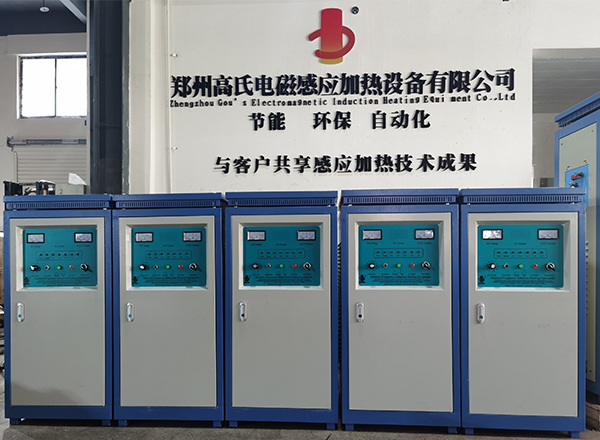
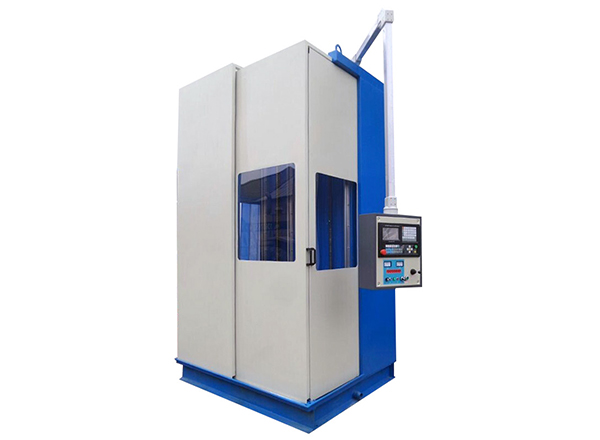
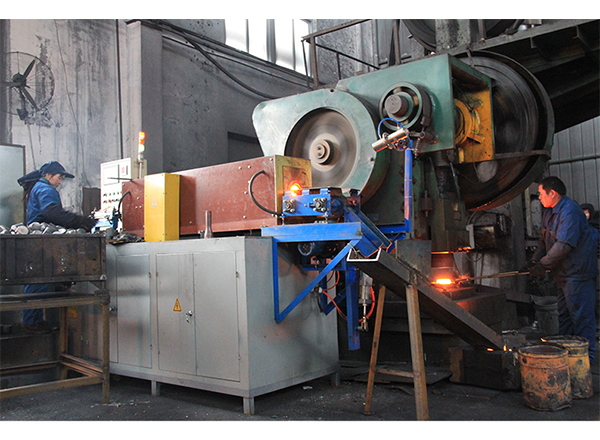
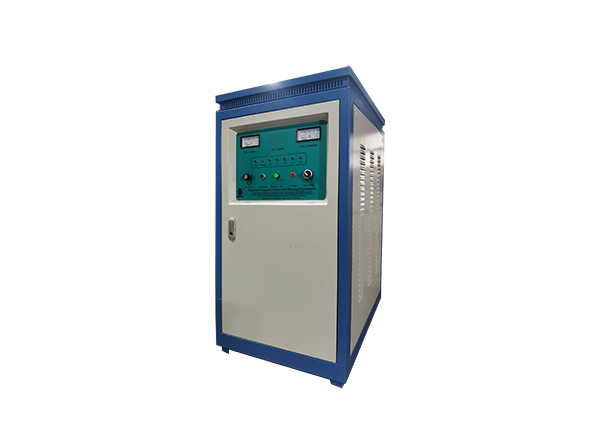
Gear racks need to withstand a certain tensile strength and friction, and the induction hardening process increases both of these properties. We have now replaced the old heating methods with an induction hardening production line for gear racks. The gear rack induction hardening production line mainly consists of hardening equipment, a touch control panel, a cooling system, and loading and unloading racks. The gear rack induction hardening production line utilizes an advanced scientific CNC operating system and reliable equipment components. During the heating process, the heating speed is fast, and the workpiece does not oxidize or deform. The integrated automatic design allows for automatic loading and unloading. An infrared thermometer provides automatic online detection, and temperature, time, and power can be freely adjusted. During hardening, the diameter and length of the gear rack are adjustable, allowing for a wide range of hardening applications. The CNC control panel provides centralized control, allowing for both manual and automatic operation.

Utilizing an integrated process of "blank material conveying → induction heating → continuous quenching → online tempering," a single production line can continuously process threaded rods with diameters of φ8-φ60mm at a speed of 1.5-3m/min, achieving a single-shift production capacity of over 2000 pieces.
Utilizing medium-frequency induction heating and a closed-loop temperature control system, the temperature difference between the surface and core of the gear teeth is controlled within ±15℃. After quenching, a uniform, fine-grained martensitic structure is formed, achieving a surface hardness of HRC45-55. The hardened layer depth is precisely controlled between 0.8-3mm, resulting in a bending fatigue life exceeding 10⁷ cycles, a 50% improvement over traditional flame-hardened gear teeth, effectively reducing the risk of fracture in mechanical transmissions.
Induction heating achieves a thermal efficiency of over 85% (compared to only 50% for traditional resistance heating), reducing energy consumption to 180 kWh/ton. The quenching medium uses a water-soluble, environmentally friendly quenching fluid with a recycling rate of 98%, resulting in no waste oil discharge. Furthermore, the production process minimizes excessive scale formation, increasing the yield rate to over 96%, reducing raw material waste by 12% compared to salt bath quenching, and significantly lowering energy and raw material costs.
The production line integrates an oil fume purification and quenching fluid filtration and recycling system, resulting in a dust emission concentration of ≤5 mg/m³ and a 95% reduction in VOCs emissions compared to fuel-fired heating and quenching processes. The entire process is automated (92% automation rate), utilizing infrared temperature measurement and robotic arms for material handling, thus minimizing human contact with high-temperature workpieces and chemical media. This results in zero workplace accidents and meets the requirements for "green factory" construction.
Utilizing a segmented induction coil design, the system precisely delivers heat to different parts of the screw thread, including the thread crest and flanks, to meet specific heating requirements. Combined with the directional cooling technology of the quenching spray ring, the thread profile distortion error is controlled to ≤0.02mm, solving the problem of reduced fitting accuracy after traditional quenching and allowing for direct assembly without subsequent grinding.
This system can flexibly process threaded rods made of various materials, including 45# steel, 40Cr, and 304 stainless steel. For structural steel, it uses a "860℃ quenching + 550℃ tempering" process to ensure a balance of strength and toughness. For stainless steel, it employs a "1050℃ solution heat treatment + 450℃ aging" process to enhance corrosion resistance. The hardening depth can also be adjusted according to requirements, making it suitable for different applications such as construction fasteners (shallow hardening depth) and precision transmission (deep hardening depth).
Integrating intelligent modules for thread length detection, online surface hardness sampling, and ultrasonic detection of the hardened layer, each threaded rod generates a unique QR code that allows traceability of over 20 process parameters, including heating temperature, quenching time, and cooling rate. Through a PLC system, parameters are adjusted in real time, resulting in a product pass rate consistently above 99.2%, meeting the quality control requirements of high-end equipment manufacturing.